Deaf Culture and Arts: How to Support and Promote Deaf Arts in the Czech Republic
The Czech Republic boasts a vibrant and diverse arts scene, but one community often underrepresented in mainstream arts is the Deaf community. Deaf culture is rich with unique perspectives, visual languages, and creative expressions that add immense value to society’s collective artistic tapestry. Supporting and promoting Deaf arts is not only about inclusivity—it also means fostering innovation and expanding the horizons of Czech culture as a whole. This article explores the landscape of Deaf arts in the Czech Republic, the distinct qualities of Deaf artistic expression, barriers faced by Deaf artists, current initiatives, and practical ways individuals, organizations, and policymakers can help Deaf arts flourish.
The Unique Qualities of Deaf Arts and Their Cultural Significance
Deaf arts are more than simply works produced by Deaf individuals. They embody a distinct aesthetic rooted in Deaf culture, which centers around Czech Sign Language (Český znakový jazyk, ČZJ), visual storytelling, and a shared experience of navigating a world designed primarily for hearing people.
.png)
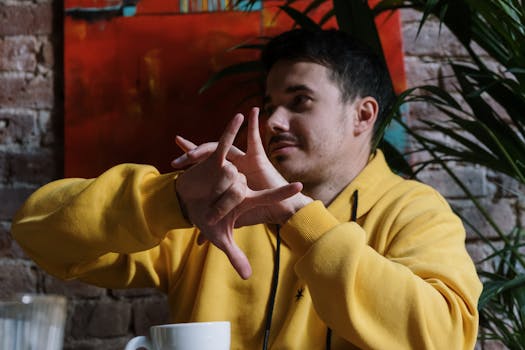
Deaf artists often use visual and gestural elements in innovative ways. For example, Deaf theater in Prague and Brno has pioneered performances that blend ČZJ, expressive movement, and visual effects, making their shows accessible not just to Deaf audiences but also to hearing spectators eager for new forms of creativity. Visual arts, such as painting and sculpture, frequently reference themes of communication, identity, and the Deaf experience, offering unique perspectives not found in mainstream Czech art.
Statistically, the Czech Republic is home to an estimated 10,000–15,000 native ČZJ users and around 70,000 individuals with significant hearing loss. Yet, the representation of Deaf-led or Deaf-centered arts in public museums and major galleries remains disproportionately low. Recognizing Deaf arts as a vital part of national heritage is essential for cultural growth and social cohesion.
Barriers Facing Deaf Artists in the Czech Republic
Despite their creativity and talent, Deaf artists in the Czech Republic face significant challenges, many of which are systemic rather than individual. Some of the key barriers include:
- Limited Access to Funding: Most public and private arts funding bodies have application processes and criteria that do not account for the communication needs or cultural context of Deaf applicants. This often leads to underfunding of Deaf-led projects. - Lack of Professional Networks: Deaf artists are less likely than their hearing peers to have access to established professional networks, mentors, or mainstream exhibition opportunities. This can result in isolation and fewer pathways to artistic careers. - Accessibility Barriers: Venues, museums, and galleries frequently lack ČZJ interpreters, captioning, or visual information, making it difficult for Deaf artists to participate fully in residencies, festivals, or competitions. - Societal Attitudes: There is still limited awareness of Deaf culture in Czech society, and Deaf arts are sometimes misunderstood as being only for Deaf audiences, rather than as valuable contributions to the broader arts landscape.A recent survey from 2023 by the Czech Union of the Deaf found that only 12% of Deaf artists felt they had “adequate opportunities” to showcase their work, compared to 47% of hearing artists in similar fields.
Comparing Deaf Arts Support in the Czech Republic and Neighboring Countries
To understand the current environment for Deaf arts, it’s helpful to look at how the Czech Republic compares to some of its neighbors. Below is a summary table highlighting key areas:
| Country | Dedicated Deaf Arts Funding | National Deaf Arts Festival | Sign Language Interpretation in Major Museums | Formal Deaf Arts Education |
|---|---|---|---|---|
| Czech Republic | No dedicated funding, limited general grants | No regular national festival | Available in select events, not standard | Very limited |
| Poland | Some dedicated grants | Annual Deaf arts festival | Some museums offer regular interpretation | Specialized courses in some universities |
| Germany | Multiple dedicated funds and programs | Large biennial Deaf arts festival | Standard practice in major cities | Integrated in arts academies |
| Austria | Occasional state funding | Regional Deaf arts events | Occasional, project-based | Some continuing education programs |
This comparison reveals that the Czech Republic lags behind its neighbors in terms of structured support for Deaf arts. Learning from successful models in Germany and Poland could help inform future strategies.
Current Initiatives and Success Stories in Czech Deaf Arts
Despite the obstacles, there are inspiring examples of Deaf arts thriving in the Czech Republic, often driven by grassroots organizations and passionate individuals.
- Tichý svět (Silent World): This organization has played a key role in organizing workshops, exhibitions, and theater performances for the Deaf community. Their events often feature artists who incorporate ČZJ and Deaf cultural themes into their work. - Deaf Theatre Prague: One of the country’s pioneering Deaf-led theater groups, Deaf Theatre Prague stages performances that are visually dynamic and accessible to both Deaf and hearing audiences. In 2022, their production “Hlas ticha” (Voice of Silence) was acclaimed for its innovative use of sign language poetry and visual effects. - International Collaborations: Czech Deaf artists have participated in exchanges and residencies in Germany and the UK, bringing back new ideas and advocating for greater recognition at home.One notable success story is that of Martina Bartošová, a visual artist from Brno, whose paintings exploring Deaf identity have been exhibited in both Czech and international galleries. Bartošová credits online communities and regional Deaf art collectives for her professional growth, highlighting the importance of supportive networks.
Actionable Ways to Support and Promote Deaf Arts
Real progress requires coordinated efforts across society. Here are several impactful ways to support and promote Deaf arts in the Czech Republic:
1. Advocate for Dedicated Funding: Encourage arts councils, government agencies, and private sponsors to create grant programs specifically for Deaf-led projects or organizations. Dedicated funding has been shown to double the number of active Deaf artists in regions where it is implemented (source: European Deaf Arts Network, 2021). 2. Increase Visibility: Museums, galleries, and festivals can invite Deaf artists to exhibit their work and participate in talkbacks or panel discussions. Featuring sign language interpretation and bilingual (ČZJ and Czech) materials ensures accessibility for all. 3. Promote Deaf Arts Education: Universities and art schools should consider including courses on Deaf aesthetics, sign language poetry, and Deaf art history. Creating scholarships for Deaf students interested in the arts can help bridge the gap in formal training. 4. Build Professional Networks: Art organizations can facilitate mentorship programs pairing young Deaf artists with experienced professionals, both Deaf and hearing. This helps break down isolation and fosters career development. 5. Encourage Media Coverage: Journalists and media outlets can highlight Deaf arts events, profile Deaf artists, and review exhibitions and performances. Increased coverage helps normalize Deaf arts as an integral part of Czech culture. 6. Support Grassroots Initiatives: Individuals can attend Deaf arts events, purchase works by Deaf artists, donate to relevant organizations, or volunteer their skills (such as translation, marketing, or technical support).The Role of Policy and Institutional Change in Advancing Deaf Arts
Institutional and policy-level changes are crucial for creating lasting impact. The Czech Ministry of Culture and regional cultural offices can help by:
- Introducing accessibility guidelines for state-funded arts institutions, mandating regular sign language interpretation and visual supports. - Incentivizing the inclusion of Deaf artists in public art projects. - Establishing a national Deaf arts council or advisory group to guide policy and programming. - Collecting and publishing data on Deaf arts participation, funding, and outcomes.According to a 2022 report by the European Union of the Deaf, countries that implemented such policies saw an average 35% increase in Deaf arts participation within five years. Institutional commitment also fosters public awareness, helping to combat stereotypes and build appreciation for Deaf culture.
Celebrating and Sustaining Deaf Arts in the Czech Republic
The Deaf arts community in the Czech Republic is a wellspring of creativity, resilience, and cultural insight. Supporting Deaf arts is not a matter of charity, but a recognition of the richness that Deaf culture brings to the nation’s artistic life. By learning from successful models abroad, advocating for policy change, and making arts spaces genuinely accessible, Czech society can ensure that Deaf artists continue to inspire, innovate, and contribute to the cultural legacy for generations to come.